

A Guide to Charging Your Nissan EV: Fast and Easy Steps
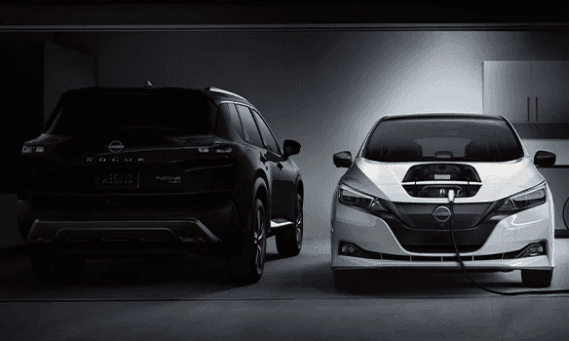
Properly maintaining your vehicle is crucial to ensure its reliability and longevity. If you own a Nissan electric vehicle (EV), you’ll need to understand the correct charging methods if its battery is to retain its optimal performance. At Jim Bass Nissan in San Angelo, we can provide all the help you require to charge and maintain your Nissan EV. Whether you’re a new EV owner or looking to enhance your topping-up habits, this guide to charging your Nissan EV will help increase your vehicle’s performance and extend its battery life.
Getting Started With Charging Your Nissan EV
Nissan EVs, such as the LEAF and ARIYA, use lithium-ion batteries. Although efficient and long-lasting, they degrade over time, like all other batteries. Correct charging can help maximize the battery’s life, but this requires knowledge of how to charge an electric car and the factors that affect its battery’s health.
Understanding Your Nissan EV’s Battery and Range
Nissan EVs have various battery sizes, each with a different range. Factors such as driving habits, weather conditions, and road terrain affect how far a single charge can take you. Sudden acceleration and extreme temperatures can increase the drain on your battery, whereas smooth driving and regenerative braking can extend its range.
The Importance of Efficient Charging for Longevity
The right charging option helps your battery exceed its expected life span. Level 1 is the slowest method. It’s suitable for overnight charging, while the DC option is best for quick recharges. We advise against frequent use of the latter, as it can accelerate battery degradation.
Home Charging Solutions for Nissan EV Owners
Charging a Nissan LEAF at home is easy with the right equipment, and there are several options.
Level 1 Charging: Using a 120V Outlet
Level 1 is the most commonly used home charging option. It uses a 120V household outlet, which is compatible with every Nissan EV. This method has slower charging speeds, adding 2 to 5 miles of range per hour. While it’s ideal for overnight charging, Level 1 may not be convenient if you need to cover long distances daily.
Level 2 Charging: Upgrading to a 240V Home Charger.
If you need faster charging for your EV, upgrade to a Level 2 charger. With this option, you can enjoy reduced charging time; it adds 10 to 25 miles of range per hour. Level 2 is better if you require quick recharging between trips or have longer daily journeys. To upgrade to this option, you’ll need to install a dedicated 240V outlet at your home. The purchase price for the charger and the installation costs may be high, but the convenience and speed you gain may be worth the investment.
Installation Considerations: Finding the Right Home Charger
There are many factors to consider when installing a home charging station for your Nissan LEAF or ARIYA. Ensure your charger is compatible with your Nissan EV model and that your home’s electrical system can support your chosen charging method. Be careful to install the charger in a position your vehicle can easily access.
Public Charging: Navigating Networks and Stations
Public charging stations enable you to top up your Nissan EV without returning to your home’s point. Nissan EVs are becoming very popular. The manufacturer sold 11,226 LEAFs in 2024, an increase of 57% from 2023. Analysts expect the EV market to reach $1.58 trillion by 2033, increasing at a compound annual growth rate of 11.43 from 2025 to 2033. With this increased popularity, public charging stations are now available in most places, including supermarket car parks, motorway services, and office blocks.
Finding Public Charging Stations Near You
You can now easily find a Nissan charging point through the various online resources and mobile apps. Automobiles offer tools that help you locate nearby charging stations. If you’re a Nissan ARIYA owner, the MyNISSAN app gives access to over 100,000 in-network public chargers. Alternatively, you can search for EV charging stations near you using Google Maps.
Understanding Different Charging Standards and Speeds
Public EV chargers are available in different types and speeds, and it’s important to understand their differences to choose the right one for your vehicle. Level 2 charging is common in public locations. As in your home, it uses a 240V outlet but can have a faster charging rate — around 30 miles of range per hour.
DC fast charging (Level 3) uses high-powered units that provide 60 to 100+ miles of range in 20 to 30 minutes. Using a 100 kW fast charger, your 2023 40 kWh Nissan LEAF can charge from 20% to 80% in 40 minutes; the 60 kWh version requires 45 minutes. These chargers are helpful for long-distance journeys, and you can usually find them at highway rest stops.
Tips for the Efficient Use of DC Fast Charging Stations
Although DC fast chargers are the quickest way to recharge your Nissan EV, you should use them wisely to avoid high costs. Plan your route to avoid unnecessary diversions for charging stations and arrive at them during off-peak hours to reduce time wastage.
Once at the station, check the pricing structure for the most cost-effective plan. Some stations bill per kilowatt-hour, while others charge per minute. Unplug your vehicle once the battery reaches 80%; the charging rate slows afterward.
Visit Jim Bass Nissan for Your Charging Needs
If you’re unsure how to charge an EV or need any information regarding your Nissan’s battery, our team at Jim Bass Nissan is here to help. Contact us today, or visit our service center in San Angelo, Texas. You can trust our experts to keep your Nissan EV running smoothly and efficiently.

0 comment(s) so far on A Guide to Charging Your Nissan EV: Fast and Easy Steps